
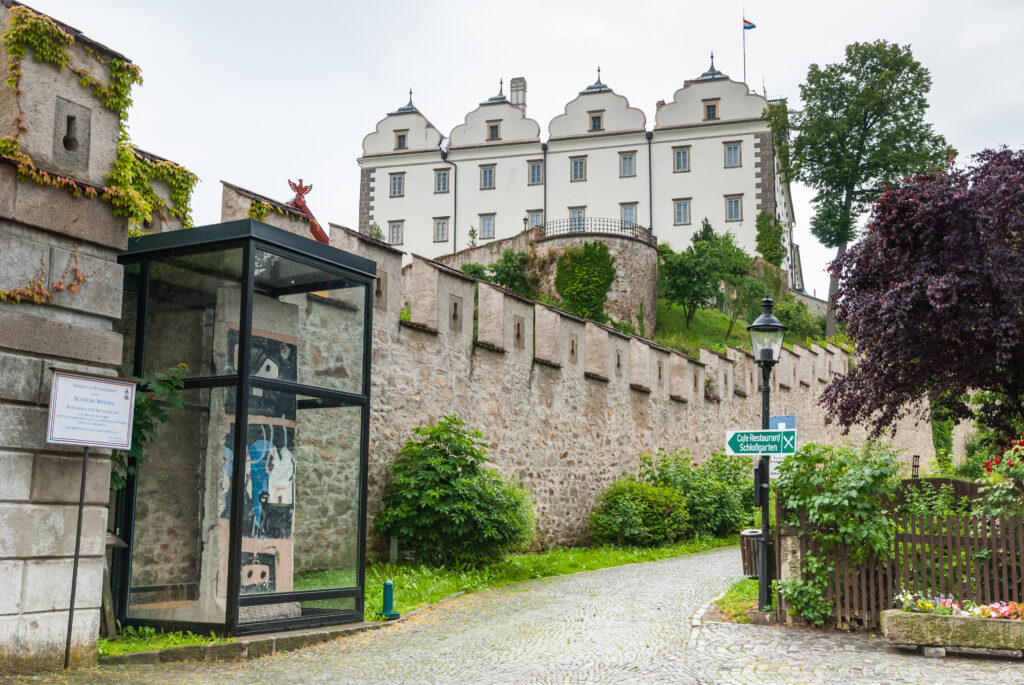
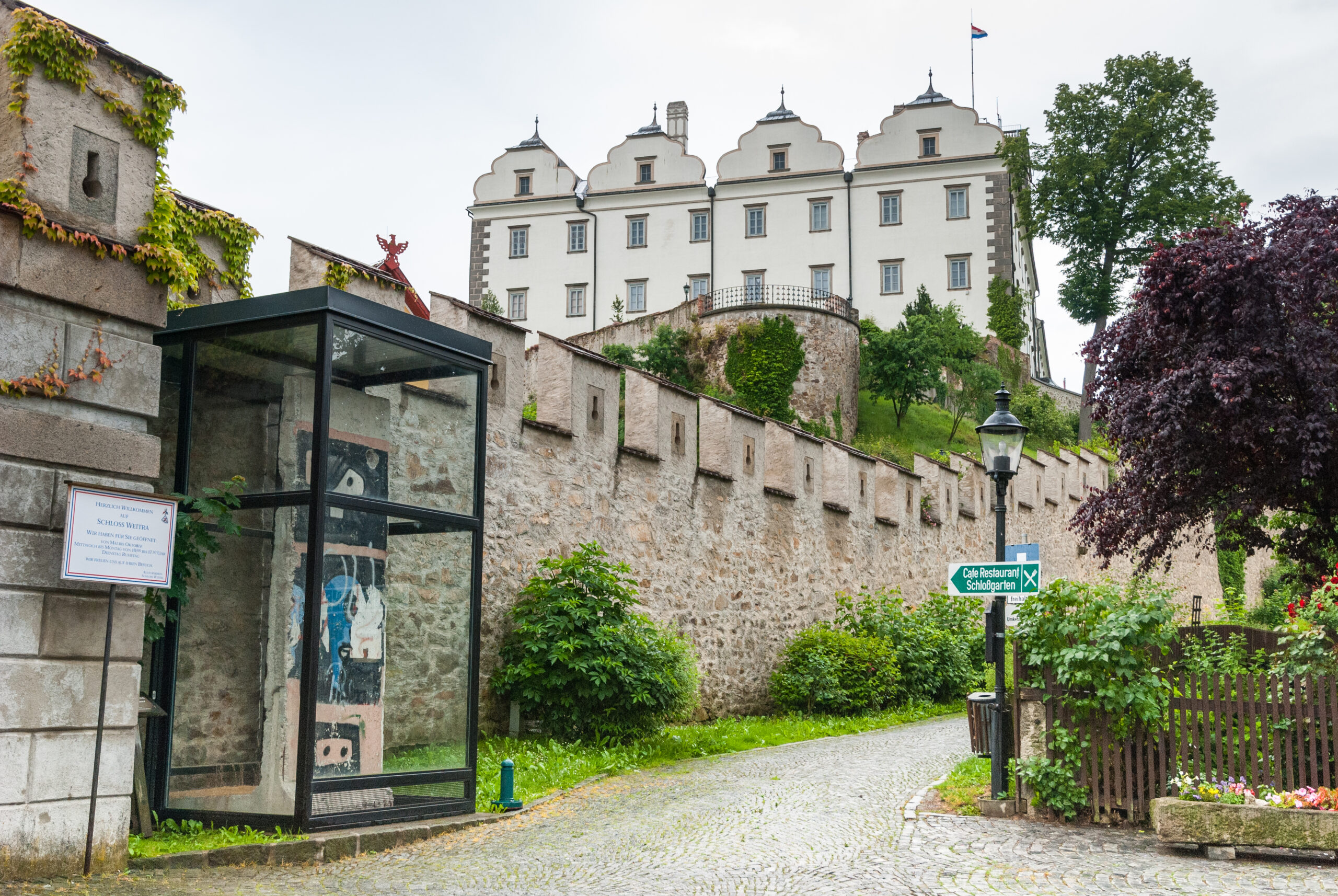
To Weitra in the Waldviertel
Von Reinhard Mandl*
Visible from afar, Weitra Castle towers over Austria’s oldest brewing town from a steep granite plateau. A nearly intact castle wall and the ensemble of townhouses on Rathausplatz also contribute to the atmospheric ambiance of this medieval town. And the nearby Hausschachenteich pond enhances the cheerful excursion atmosphere that begins to take hold even during the ride on the Franz-Josefs-Bahn through the scenic Waldviertel region.
The journey begins on Platform 2: From Vienna to the Waldviertel
If I were taking this trip on my own, I would have postponed it by a few days, because it’s been raining almost nonstop since yesterday. My travel-loving friends Pia and Mike, however, aren’t as flexible due to work commitments.
As agreed, we meet at Franz-Josefs-Bahnhof in Vienna, where the double-decker Cityjet REX 41 is already waiting on platform 2 to depart for Ceské Velenice. The station was built in 1872 as the terminus of the Franz-Josefs-Bahn, which, during the Austro-Hungarian Empire, ran via Budweis and Pilsen to the former garrison town of Eger in the far west of what is now the Czech Republic.
As early as 1871, a branch line of this railway from Gmünd heading north toward Prague was opened to traffic. This direct connection between the imperial capitals of Vienna and Prague remained very popular until the end of the monarchy.
After 1918, the Franz-Josef Railway lost its national significance due to the new political circumstances. The Gmünd main station was now located on Czech territory and was renamed Ceské Velenice.
Anecdotes and Scenery Along the Way to Gmünd
My first ride on a “double-decker” is entertaining, since my friends are passionate train enthusiasts and have plenty of stories to share. “Look, there are those Viennese slums again,” says Pia at the sight of an allotment garden community, adding by way of explanation: “Not long ago, we had an American sitting next to us who, upon seeing an allotment garden community, said to his wife, ‘Even the slums look nice in Austria!’”
By now, Tulln is behind us, and we’ve already crossed the Danube. Large yellow rapeseed fields bring color to the rainy landscape. Soon before Eggenburg, the Kogel stones—formed over millions of years from Maissau granite—catch our eyes.
Between Eggenburg and Gmünd, there are no major towns directly along this railway line. The three district capitals—Horn, Zwettl, and Waidhofen an der Thaya—are bypassed in a wide arc and can only be reached by rail via small feeder lines.
Arrival at Gmünd Station: The onward journey by bus to Weitra isn’t as idyllic as a ride on the nostalgic Waldviertelbahn, which unfortunately is now used only for tourism, but it gets us to our destination faster.
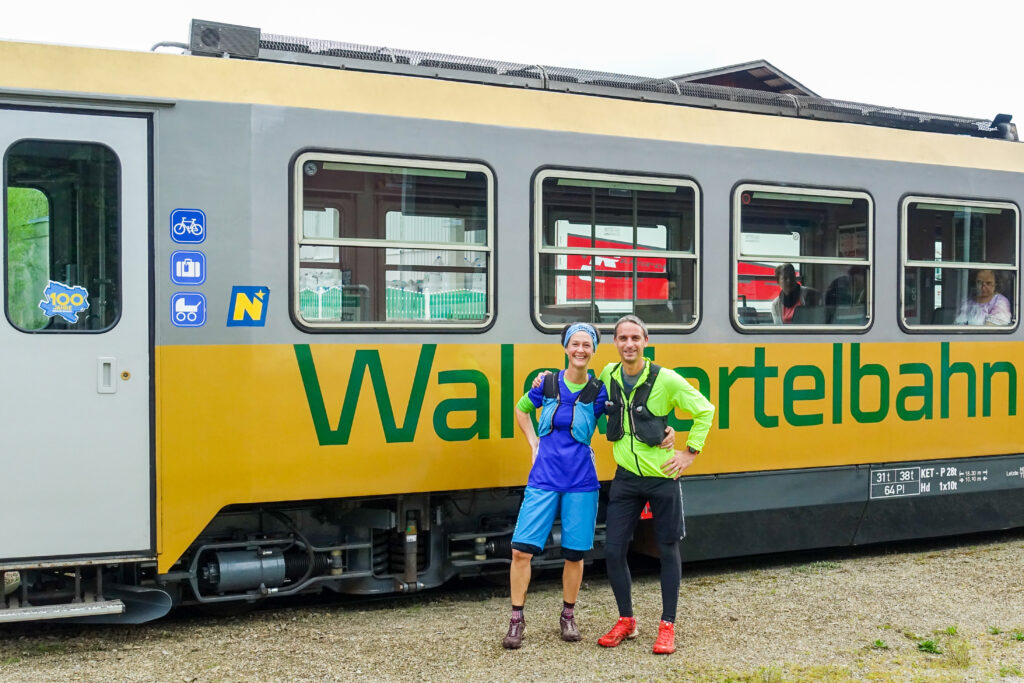
First Impressions of Weitra: From the “Sauteich” to the Castle Tower
Directly behind the bus station shelter in Weitra is a small pond. It is a remnant of the former town pond, known locally as the “Sauteich.” Cattle dealers from Weitra, known as “Saubarone,” would buy entire herds of pigs in Hungary, Serbia, or Galicia, which were then driven by herders all the way to the distant Waldviertel region and washed in the Weitra town pond upon their arrival.
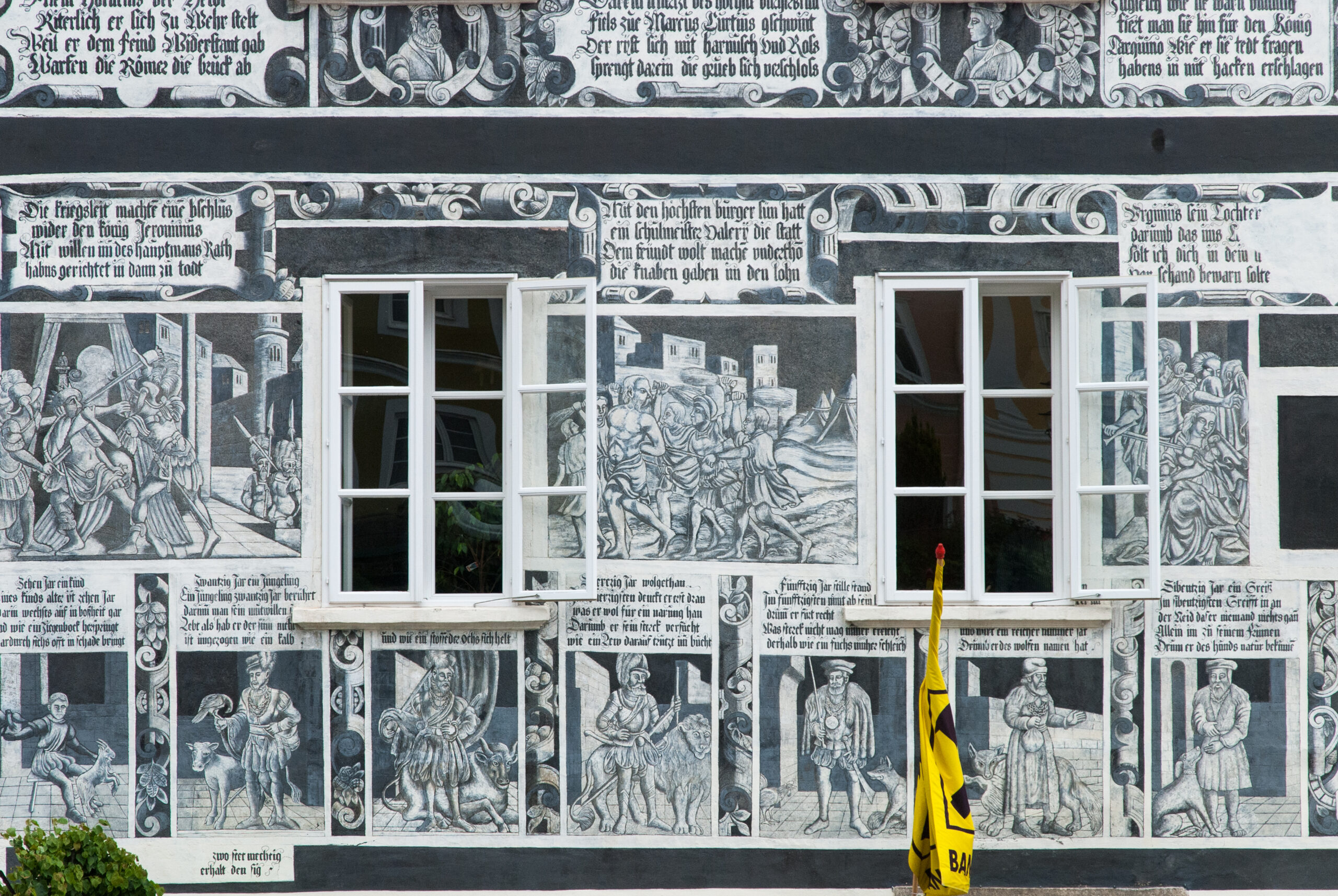
Our tour of the old town first takes us up to the castle. To get in the mood for the town, let’s enjoy the beautiful panoramic view from the castle tower. We look down on Town Hall Square, where the Sgraffito House in particular catches the eye. Our gaze wanders over the roofs of the old town, which are dominated by a mighty oak tree near the parish church. To the north, Old Weitra comes into view, the former administrative center of the Kuenring territory. At the beginning of the 13th century, Hadmar II moved it three kilometers south for strategic reasons.
“The Czech Republic is over there,” I say to Pia and Mike, pointing west. From Weitra, the former East lies in a westerly direction. The Nebelstein is barely visible. True to its name, the famous lookout mountain is hidden behind a mixture of clouds and wisps of fog. The Mandlstein, too, is shrouded in cloudy white.
Before we leave Weitra Castle, we’ll take a look at the large courtyard with its striking arcades. The castle houses several permanent exhibitions and is a popular venue for cultural events.
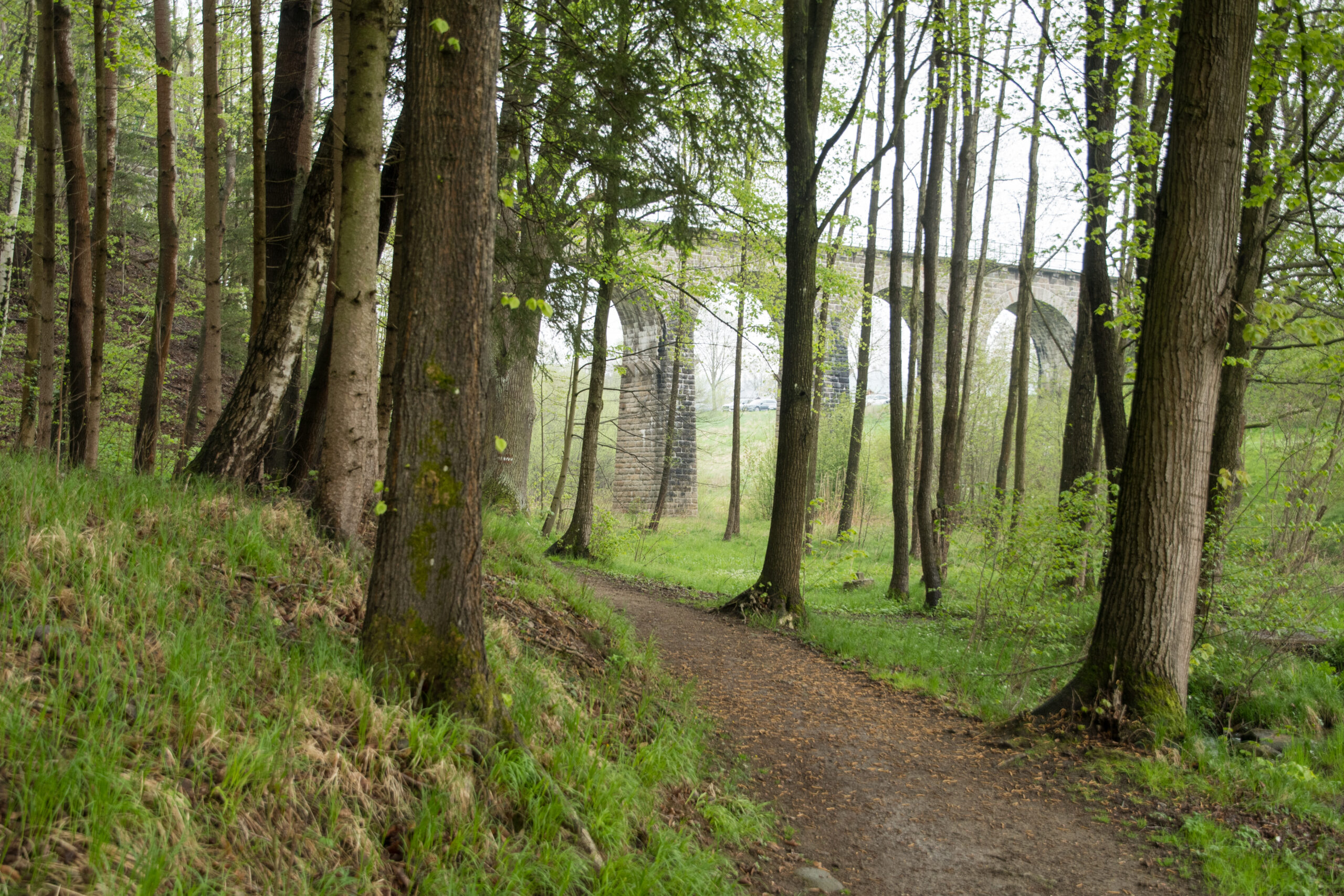
Under tall trees, leading to the quiet “Hausschachenteich”
Our next stop takes us a short distance out of town. A narrow path winds its way between majestic tall trees, passing beneath the picturesque Waldviertelbahn viaduct and up to the Hausschachen Pond. Due to the weather, the swimming pond is completely deserted today. We stop for a meal at the Hausschachen, a modern hotel-restaurant on the edge of the golf course. We sit on the large covered terrace, and while we wait for our baked carp, we gaze out at the dark, bog-like surface of the pond.

From Town Hall Square to the Cistern
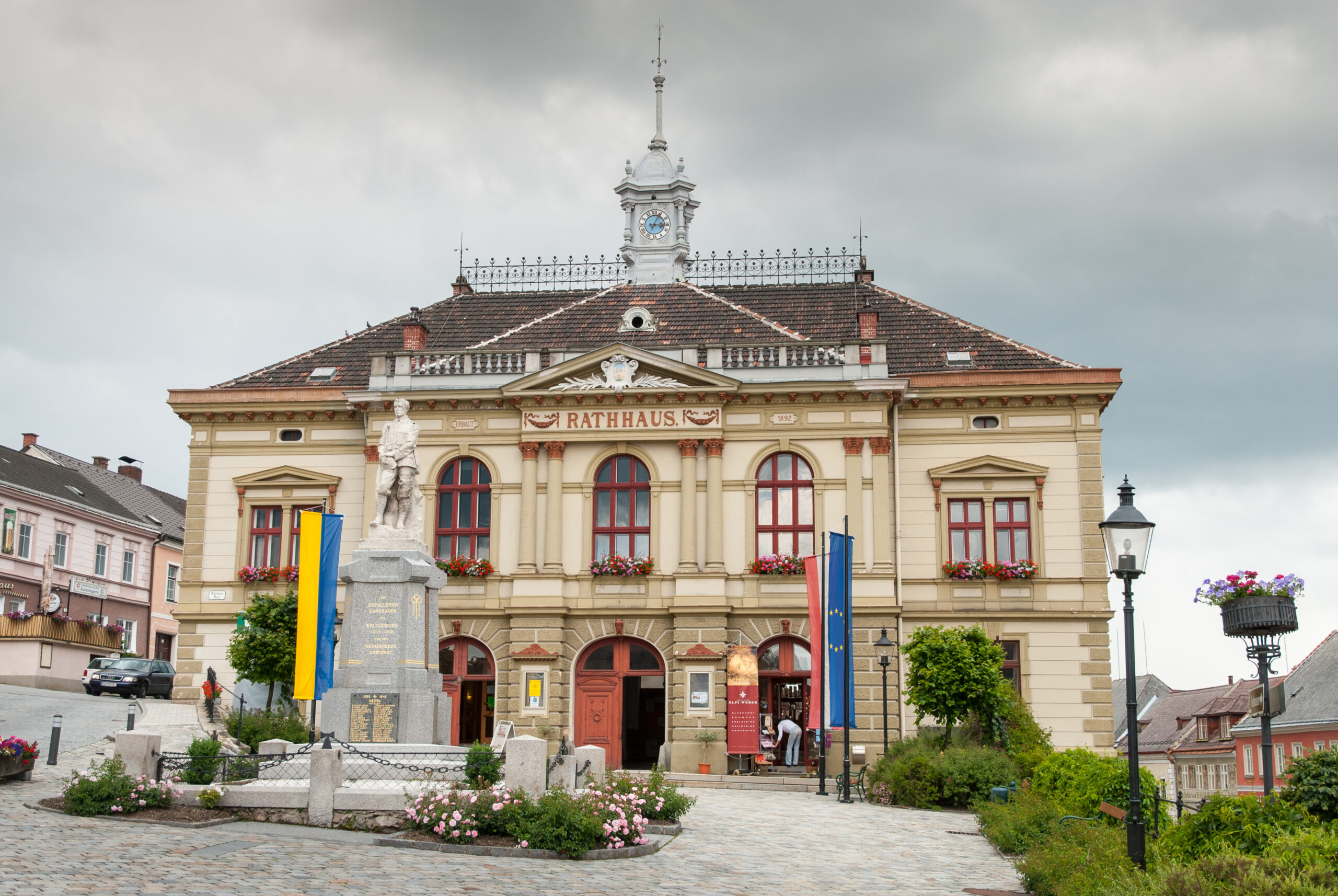
After our delicious meal, we’ll stroll back to the old town. There’s plenty of time for a short sightseeing tour before our bus departs. In addition to the stately town hall and the Baroque Holy Trinity Column, the famous Sgraffito House on Town Hall Square really catches the eye. The lower row of the painted façade depicts the “Stages of a Man’s Life,” each symbolically associated with an animal.
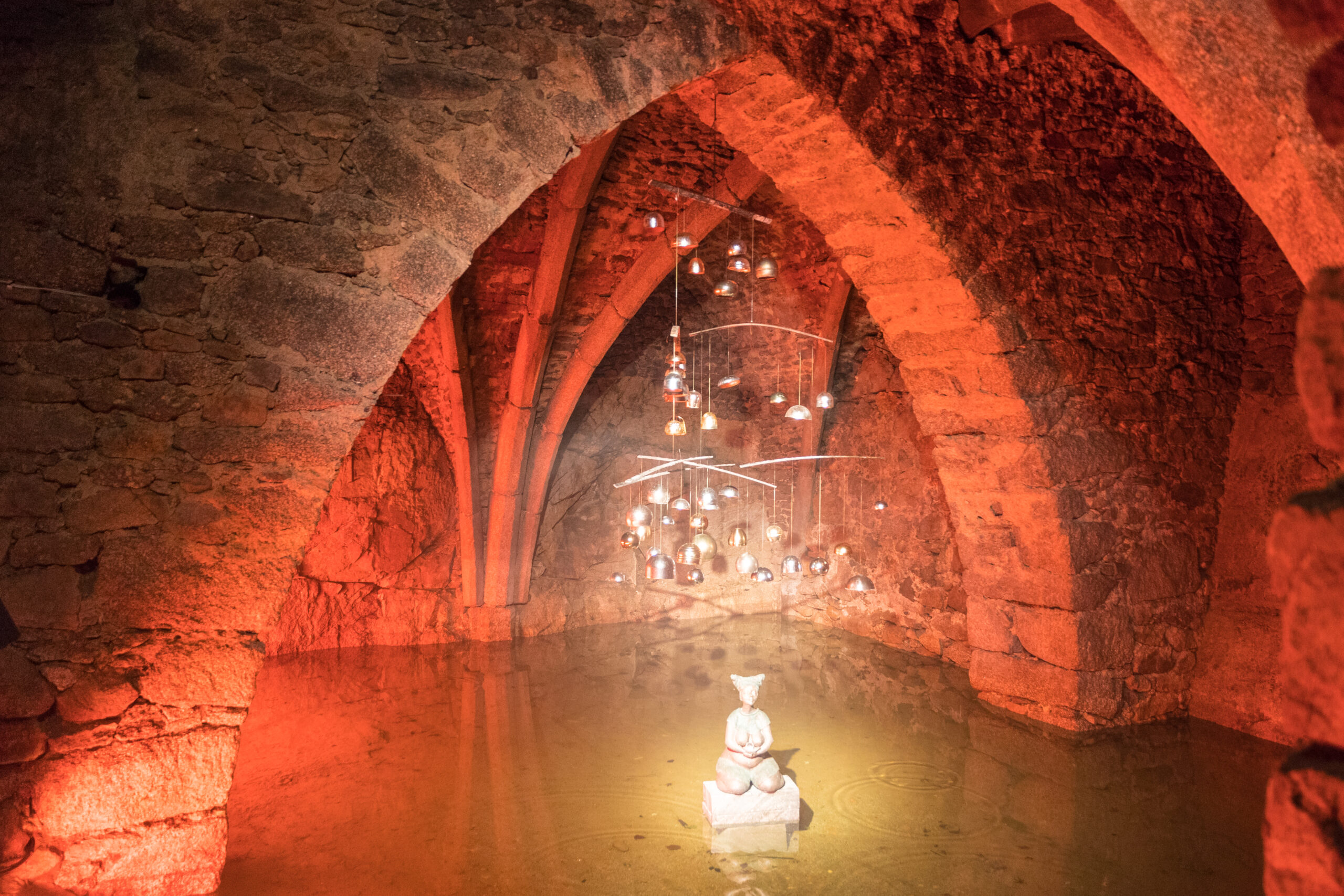
We continue along the new “Weitra Beer Mile” to the publicly accessible cistern, a 14th-century water reservoir that was rediscovered just a few years ago. The colorfully lit cistern is fed by water from three different sources.
Farewell to Weitra: Back to Vienna through the Upper City Gate
On the way back, Pia finds a café and pastry shop where, in her opinion, they serve the best poppy seed pastries in the entire Waldviertel region—the perfect souvenir!
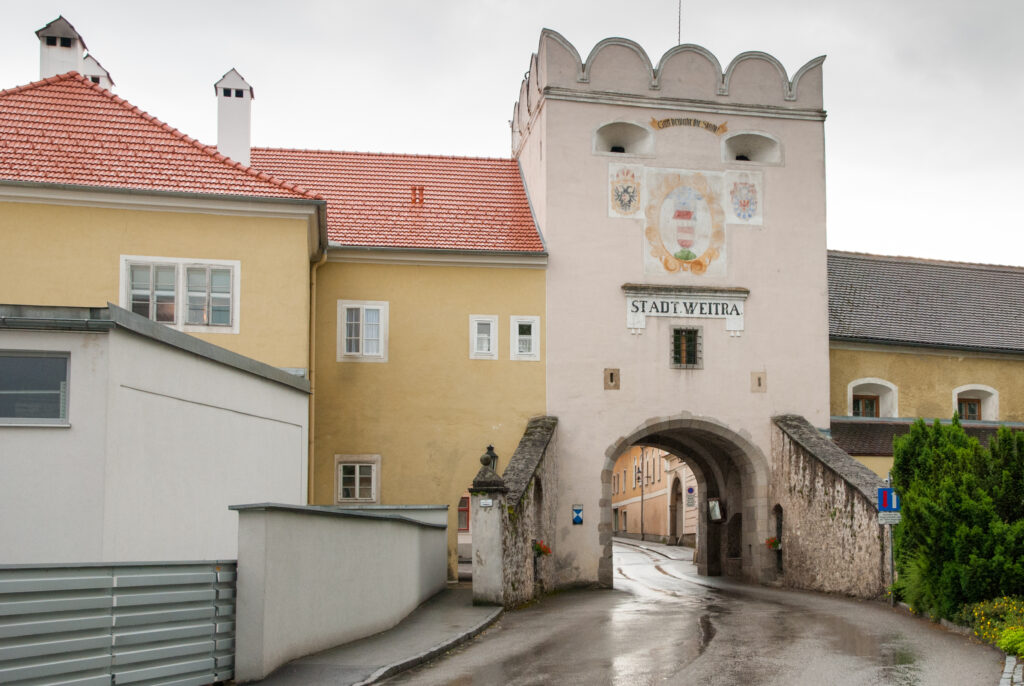
We leave the old town through the Upper City Gate, whose small windows look like eyes winking at us with a friendly smile, and head toward the bus station. Seventeen minutes later, we’re already back in Gmünd.
On the drive back to Vienna, I show my friends how beautiful the area around Weitra would have been in the sunshine: on my laptop, we click through photos of the Altweitra ponds and blooming poppy fields. But I don’t even need my sunny photos to convince the two of them to come back. And maybe the weather will cooperate on our next trip to the Waldviertel—if not, we’ll just go for a walk in the rain together again!
*This text is an abridged version by the author of Chapter 10 of his book *Discover Austria with the KlimaTicket – 20 Trips by Bus and Train*.